
Cart
0
The resale Rolex value for any watch isn't some fixed number you can look up in a book. It’s a living, breathing figure that shifts based on its specific model, its physical condition, and whether you have the complete original kit—the box and papers. Think of it like a stock whose price is constantly being pushed and pulled by market forces and collector demand. This is precisely why two watches that look identical at first glance can have wildly different price tags.
What Actually Determines Rolex Resale Value
Before we get into the nitty-gritty, let's get a clear picture of what really drives a Rolex's price on the pre-owned market. The model and reference number are the starting point, sure, but several other factors act as value multipliers, turning a great watch into a serious investment piece. Nailing down this framework is the first step to accurately sizing up any Rolex.
These core elements don't exist in a vacuum; they all work together to create the final market price. If you overlook even one of them, you could end up with a major miscalculation, whether you're buying or selling.
The Foundational Pillars of Value
We can break down the most important factors into a few key areas. Each one tells a piece of the watch's story and adds to its desirability—and ultimately, its price. Think of these pillars as a reliable checklist for your initial assessment.
Here's a quick summary of the big drivers that determine what a pre-owned Rolex is truly worth in today's market.
Key Factors Influencing Rolex Resale Value
| Value Factor | Description | Impact Level |
|---|---|---|
| Model & Reference | The specific model (e.g., Submariner, Daytona) and its unique reference number. This sets the baseline value. | High |
| Physical Condition | The watch's state, including scratches, dings, and whether parts are original or replaced. Originality is king. | High |
| Box & Papers | The complete original set: box, warranty card, manuals, hang tags. This is proof of authenticity and provenance. | Medium-High |
| Provenance | The watch's ownership history, especially if it was owned by a notable person or has a documented story. | Medium |
| Service History | Records of maintenance, especially from Rolex Service Centers (RSC), showing it has been well-cared for. | Medium |
| Rarity & Scarcity | Limited production runs, discontinued models, or unique features (e.g., "error dials") that make it rare. | High |
| Market Trends | Current collector demand, pop culture influence, and overall economic conditions that affect luxury goods. | High |
As you can see, it's a mix of tangible and intangible qualities that come together to form the final number.
Now, let's unpack these a bit more.
- Model and Reference Number: This is ground zero. Iconic models like the Daytona, Submariner, or GMT-Master II are always in high demand, which means they start with a much higher baseline value. It’s simple supply and demand.
- Physical Condition: This is a huge one. Scratches, dings, a poorly polished case, or aftermarket parts can absolutely tank a watch's value. Serious collectors want originality and pristine condition more than almost anything else.
- "Box and Papers": Having the original box, warranty card, manuals, and even the sales receipt creates what collectors call a "full set." This package proves the watch's history and authenticity and can easily add a 15-25% premium to its value.
- Market Demand and Trends: Just like any other luxury asset, Rolex values are swayed by what's hot right now. A watch gets featured in a blockbuster movie or is seen on the wrist of a celebrity, and boom—its value can shoot through the roof seemingly overnight.
A Rolex's value is a blend of its tangible quality and its intangible story. The mechanics and materials set the floor, but its history, completeness, and desirability in the current market determine its ceiling.
This idea isn’t just for wristwatches. If you want to understand the universal principles that dictate the worth of collectible timepieces, you can find similar concepts in guides on how to assess vintage pocket watch value. The core tenets of rarity, condition, and provenance apply across the board in horology.
Of course, all of this assumes you're dealing with the real thing. Before you go any further, confirming you have a genuine timepiece is the most critical step. You can learn more about this crucial process in our guide on how to tell if your Rolex is real.
The 7 Factors That Truly Drive a Rolex's Resale Value
Figuring out what a pre-owned Rolex is worth is more art than science, but it’s an art governed by some very clear rules. It’s not just about the name on the dial. The real value is a cocktail of seven distinct ingredients, each playing a critical role in the final price.
From the specific numbers engraved between the lugs to the story behind the watch, these factors are what separate a good Rolex from a great investment. Once you get a feel for them, you'll start to see a watch not just for what it is, but for what it’s truly worth.
1. Model and Reference Number
Everything starts here. The model and reference number is the watch's first and last name—its core identity. We all know the heavy hitters like the Submariner, Daytona, and GMT-Master II command a premium right out of the gate. Their legacy and relentless demand give them a high-value floor.
But the reference number is where the details—and the dollars—really lie. A Submariner 16610 is a world away from a 116610LN in the eyes of a collector. Those subtle differences in the ceramic bezel, the movement, and the bracelet construction are what make one worth thousands more than the other. This string of numbers is the single most important starting point for any valuation.
2. Physical Condition
With the model identified, the next question is: how has it lived its life? A Rolex that looks like it just left the factory will always fetch a higher price than one that’s seen a few too many adventures. For serious collectors, originality is king.
Here's what to look for:
- Case and Bracelet: Deep dings and scratches are obvious red flags. But just as important is evidence of over-polishing, which can soften the sharp, crisp lines of the case lugs, erasing the watch's original character.
- Dial and Hands: Check for any signs of aging, water damage, or discoloration. On vintage pieces, the integrity of the original luminous material is a huge deal.
- Crystal: Scratches on the crystal can suggest a hard life, though this is often the easiest part to fix.
Interestingly, an unpolished watch with its factory finish and a few honest scratches is often more valuable to a purist than a watch that's been polished to look brand new. Polishing removes metal, and you can never get that back.
3. The "Full Set": Box and Papers
Having the original box and papers is like having the birth certificate and title for a classic car. This "full set" includes the warranty card, manuals, hang tags, and the box it came in. It’s the ultimate proof of authenticity and provenance.
A full set can easily tack on a 15-25% premium to a watch's final price. To a collector, this isn't just packaging; it's a non-negotiable part of the watch's history.
This simple hierarchy shows what matters most in determining a Rolex's price.
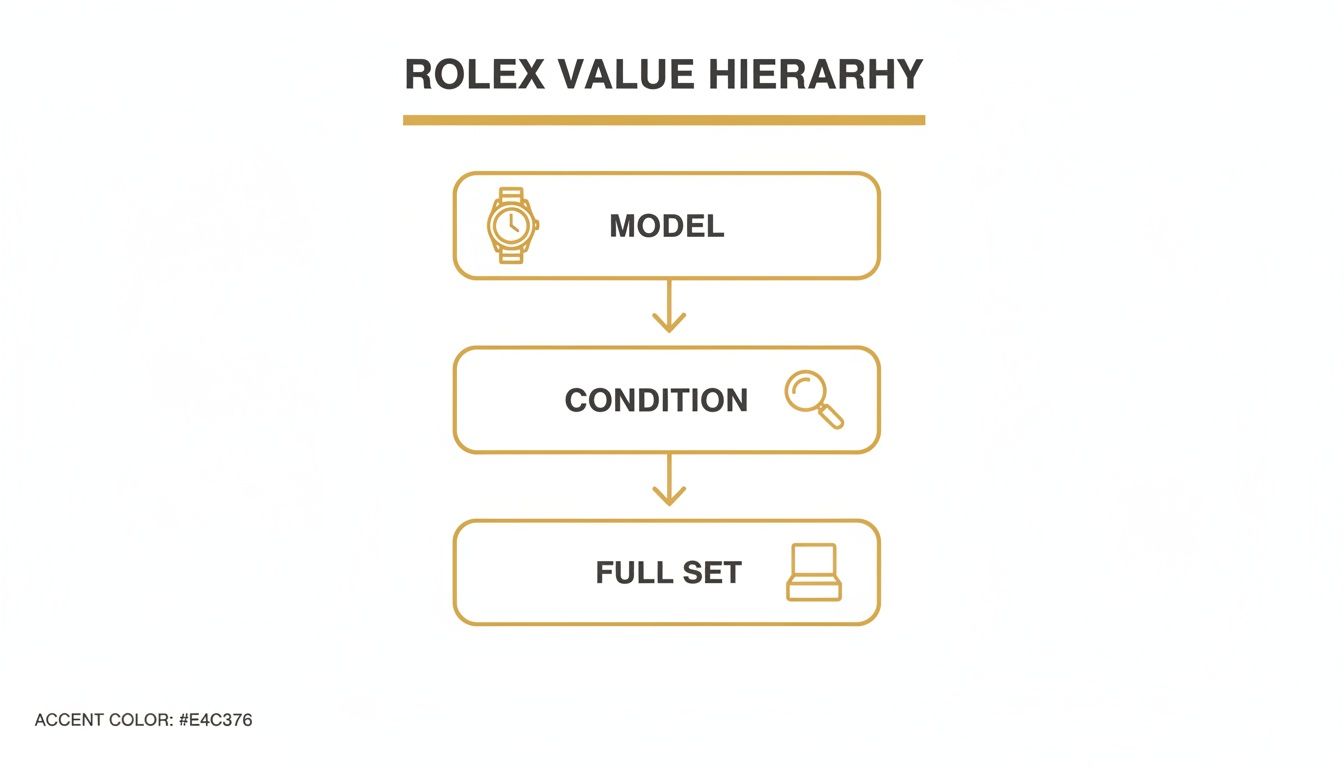
The model sets the stage, but the condition and the presence of a full set are what truly elevate its value into the next tier.
4. Provenance and Ownership History
Provenance is the story of the watch. While not every Rolex was owned by Paul Newman, a verifiable ownership history adds a layer of trust and romance that collectors love. This could be as simple as the original sales receipt or a stack of old photos showing a grandfather wearing the watch on his wedding day.
And if the watch was owned by someone famous or has a truly unique story attached to it? The value can skyrocket. This is the point where a watch stops being just a timepiece and becomes a piece of history.
5. Official Service History
A stack of receipts from an official Rolex Service Center (RSC) is a beautiful thing. It shows the watch has been cared for properly throughout its life, assuring the next owner that the movement is clean, lubricated, and running with only genuine Rolex parts inside.
But it’s a bit of a double-edged sword. While mechanical servicing is a definite plus, cosmetic work can be a problem for vintage purists. A service that involved polishing the case or replacing an original, beautifully patinated dial with a new one can actually hurt the value in the eyes of a serious collector.
6. Rarity and Scarcity
Simple economics: when supply is low and demand is high, prices go up. In the Rolex world, rarity can come from a few places:
- Limited Production: Some references were simply made in smaller numbers.
- Discontinued Models: Once a watch is out of production, the number available is fixed forever.
- Quirks and "Errors": Watches with unique features like "error dials," special colorways (think the "Tiffany" blue dial), or transitional models that mix parts from old and new references are incredibly sought-after.
These little variations create a frenzy among collectors willing to pay a massive premium for a piece that no one else has. If you want to dive deeper into what makes a watch hold its value, our guide on luxury watches that hold value is a great place to start.
7. Current Market Trends
Finally, you can’t ignore the elephant in the room: the market itself. The value of a Rolex is heavily influenced by the wider economy, pop culture, and what collectors are buzzing about at any given moment. A watch can get white-hot overnight just by appearing on the right celebrity's wrist.
The Rolex market has had a wild ride. In 2016, the average resale price hovered around $15,000. By 2021, that number exploded to $35,142—a staggering 32.56% increase in just one year. While the market has since cooled a bit to around $33,500 in 2023, the long-term trend is undeniable, with prices up over 120% since the mid-2010s. The numbers don't lie.
Analyzing the Most In-Demand Rolex Models
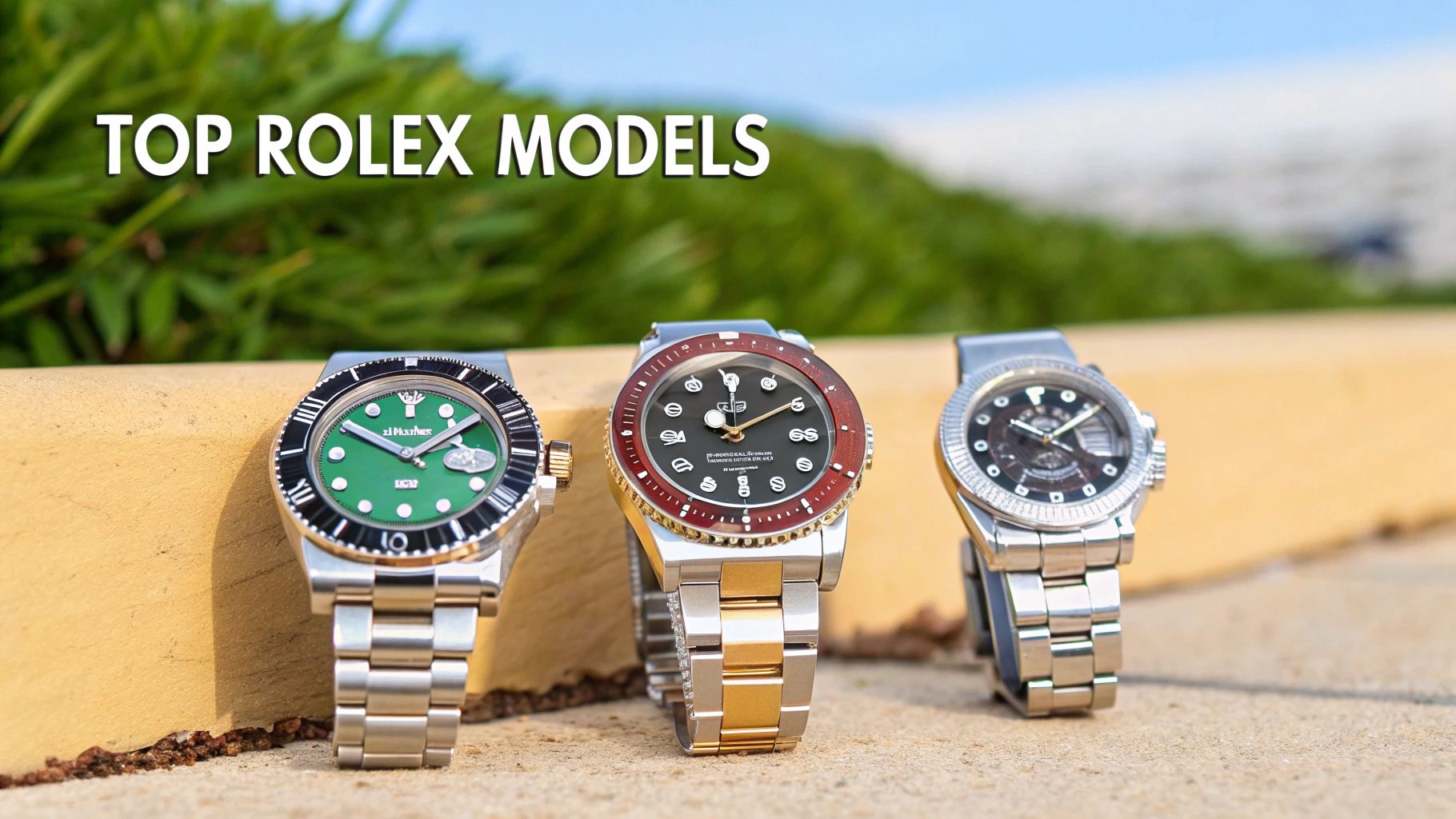
It’s one thing to talk about the theory behind resale Rolex value, but it’s another to see it play out in the real world. Not every Rolex is destined for the same meteoric rise on the secondary market. A few iconic families consistently leave the others in the dust, propelled by their history, design, and raw, unfiltered demand.
These are the heavy hitters of the Rolex catalog. They’ve gone from being simple tools to cultural icons and, for many, tangible assets. Looking at superstars like the Submariner, Daytona, and GMT-Master II shows us exactly how factors like rarity, unique features, and sheer market hype can create jaw-dropping value.
The Cosmograph Daytona: The Undisputed Champion
When you talk about resale value, the Rolex Daytona is in a league of its own. It was born on the racetrack for professional drivers, but its association with motorsport legend Paul Newman and its notoriously tight supply chain transformed it into the brand’s most sought-after chronograph. Getting a stainless steel model from a dealer? Good luck.
That impossible scarcity creates an enormous premium on the open market. When Rolex introduced the ceramic bezel with reference 116500LN back in 2016, it was like throwing gasoline on a fire. Both the black and the white "Panda" dial versions immediately started trading for double their retail price, and they haven't looked back. For serious collectors, a Daytona isn't just a watch—it's a blue-chip asset that has consistently proven its mettle.
The GMT-Master II: A Traveler's Icon
The GMT-Master II is another absolute powerhouse, loved for its practical dual-time-zone function and, of course, its vibrant two-tone ceramic bezels. Those colorful inserts have earned legendary nicknames that are now common language in the watch world, and they're a huge reason for the model's incredible resale value.
The most famous of the bunch include:
- The "Pepsi" (BLRO): The original red and blue bezel is an icon. Its modern ceramic form is a fan favorite that carries a massive premium.
- The "Bat-Girl" (BLNR): The black and blue bezel, typically on a Jubilee bracelet, is a slightly more modern, dressier take, but it's every bit as popular.
These watches are wildly popular because they just look fantastic and serve a useful purpose, making them a top pick for collectors and jet-setters alike. The distinct look of the GMT-Master II ensures it remains one of the most recognizable and in-demand Rolexes you can find. To see exactly how these stack up, you can explore this breakdown of the top 5 Rolex models that retain and increase their value.
The Submariner: The Definitive Dive Watch
The Rolex Submariner is, quite possibly, the most famous watch on the planet. It set the standard for the modern dive watch, and its design DNA has been copied countless times but never truly matched. Its bulletproof build, timeless aesthetics, and storied past make it a cornerstone for any watch collection.
While the classic black-on-black Submariner is always a solid performer, certain versions with a splash of color command even higher prices. The green-bezel "Hulk" (116610LV) and its successor, the "Cermit" or "Starbucks" (126610LV), are perfect examples. A simple change in color created a market frenzy, pushing their values far beyond their standard counterparts.
The performance of these professional models illustrates a core principle of Rolex valuation: while the brand name provides a high floor, it's the specific reference, dial color, and bezel configuration that build the skyscraper of value on top of it.
The Oyster Perpetual: A Surprising Star
For years, the Oyster Perpetual was seen as Rolex's sensible, entry-level watch. It was a clean, time-only piece that flew under the radar, free from the hype surrounding the professional models. That all changed in 2020 when Rolex dropped a new collection with a range of bold, lacquer dials.
One color in particular—a bright turquoise blue, quickly nicknamed the "Tiffany" dial—ignited the market.
This single colorway turned the humble OP into one of the hottest watches you could get. After a short production run, the "Tiffany" dial models in 36mm and 41mm were discontinued, and their prices exploded. They now trade for several times their original retail price, proving that a dose of rarity and a powerful cultural moment can elevate any model to superstardom.
To put this into perspective, let's look at the numbers. Here’s a quick snapshot of what some of these popular models are fetching on the secondary market compared to their original sticker price.
Rolex Model Resale Value Snapshot (Percentage of MSRP)
| Rolex Model (Reference) | Typical Resale Value (% of MSRP) | Key Value Driver |
|---|---|---|
| Cosmograph Daytona (116500LN) | 190% - 220% | Extreme scarcity, motorsport heritage |
| GMT-Master II "Pepsi" (126710BLRO) | 170% - 190% | Iconic "Pepsi" bezel, travel function |
| GMT-Master II "Bat-Girl" (126710BLNR) | 160% - 180% | High demand for blue/black bezel |
| Submariner "Hulk" (116610LV) | 180% - 210% | Discontinued, unique green dial/bezel |
| Oyster Perpetual "Tiffany" (124300) | 220% - 250%+ | Discontinued rare dial, trend-driven |
These figures show just how powerful a specific reference or dial can be. The GMT-Master II 'Pepsi on Oyster' (ref. 16710BLRO), for example, often resells for an incredible 188% of MSRP, while the 'Bat-Girl' (126710BLNR) isn't far behind at 171%. But the "Tiffany" dial Oyster Perpetual blows them away, reaching a staggering 242% of its original retail price, a clear testament to how a unique feature can create explosive demand.
How to Maximize Your Watch Resale Value
Getting the best price for your Rolex isn't about luck—it's about smart preparation. Think of it like getting a classic car ready for auction; a few key steps can make a world of difference in the final hammer price. This is your playbook for attracting serious buyers and making sure you don't leave any money on the table.
To really position your timepiece for a top-dollar sale, you need to focus on five key areas. We're talking about timing the market, making a savvy call on servicing, gathering every last piece of paper, nailing the presentation, and—crucially—picking the right place to sell. Following this checklist will help you sidestep the common mistakes that can chip away at your resale Rolex value.
Time the Market When Possible
While the Rolex market is almost always hot, it still has its own seasons. Economic shifts and new collector trends create peaks and valleys. If you can sell when demand is surging—something you'll notice from rising auction prices and dealers running low on stock—you can often add a nice premium to your watch's value.
Stay plugged into market reports from the big auction houses and well-known dealers. If you aren't in a hurry, waiting for an upswing can mean a significantly better offer. That said, a great watch in high demand will always find a good home, regardless of the broader market mood.
Make a Strategic Servicing Decision
It’s easy to assume a fresh service will automatically boost the value, but that's a classic—and often expensive—misstep. Whether to service a watch before selling is a tricky decision that really depends on the specific model and its current state.
Here’s how to think about it:
- For Vintage Models: Stop. Do not service it without getting an expert opinion first. Vintage collectors prize originality above all else. They love the little things that show a watch has lived a life, like a faded "ghost" bezel or a beautifully aged dial. An official Rolex service will likely replace these character-rich parts with modern ones, which could literally slash the watch's value.
- For Modern Models: If the watch is running poorly or has some serious dings and scratches, a trip to an official Rolex Service Center (RSC) can be a smart move. It restores the watch to its former glory and adds an RSC service card, which acts as another stamp of authenticity.
- The Middle Ground: What if your watch runs perfectly fine and just has minor, everyday wear? It's usually best to sell it as-is. The new owner might be particular about who services their watches, and this way, you avoid paying for an "upgrade" they never wanted.
Gather Every Piece of Documentation
The original "box and papers" are your golden ticket. Seriously. Think of them as the watch's birth certificate and passport all in one. A complete package, known in the industry as a "full set," gives a buyer total confidence and can easily boost the price by 15-25% or more.
Before you even think about listing your watch, go on a treasure hunt for everything that came with it new. You're looking for:
- The original inner and outer boxes
- The warranty card or paper certificate (this is the big one)
- Instruction manuals and booklets
- The green and red chronometer hang tags
- Any spare bracelet links
- The original sales receipt, if you can find it
The more complete the set, the more your watch stands out. Every missing item is an excuse for a buyer to negotiate down. Showing up with a full kit immediately frames your watch as a collector's piece that’s been cherished from day one.
Perfect the Presentation
You only get one chance to make a first impression. A grimy watch screams neglect and makes a potential buyer wonder what other maintenance was skipped. Before you take a single photo, give it a gentle but thorough cleaning. A soft toothbrush, some warm water, and a tiny drop of mild soap are all you need to get the gunk out of the case and bracelet.
Great photos are just as critical. You don't need a professional studio, but good, natural light is a must. Take sharp, clear pictures from every angle. And be completely honest about any scratches or dings—total transparency builds trust and saves you headaches down the road. If you're looking to learn how to sell your Rolex watch on your own, mastering the presentation is step one.
Choose the Right Sales Channel
Where you sell your watch matters just as much as how you prep it. Different platforms offer different trade-offs between security, audience reach, and the final price you'll get. Selling privately on a forum can be risky, whereas a trusted specialist dealer brings security and expertise to the table. Some sellers find success reaching a wide audience through the world of online sales, a skill detailed in guides on Mastering Online Auctions for Watches. For most people, however, working with a reputable independent dealer offers the ideal mix of a fair price, total security, and a hassle-free process.
Selling Your Rolex with Confidence and Security
Let’s be honest: deciding to sell a Rolex can feel daunting. It’s not just a watch; it's a significant asset, and you want to make sure you get a fair price without putting yourself at risk. The path you take to sell it will make all the difference in your final payout and your peace of mind.
Choosing the right place to sell is probably the single most important decision you'll make in this whole process.
Comparing Your Sales Channel Options
When it comes to selling your Rolex, you really have three main avenues. Each comes with its own trade-offs in terms of risk, how much work you have to do, and the price you'll ultimately get.
-
Private Peer-to-Peer Sales: Selling directly on a platform like eBay or a watch forum can sometimes get you top dollar, but it's also where you'll find the most risk. You’re on the hook for everything—vetting potential buyers, dealing with payment systems, figuring out insured shipping, and handling any disputes or fraud that might pop up. It’s a lot to manage.
-
Auction Houses: For a truly rare or historically important Rolex, an auction house can be a great choice. They have a massive reach, but the catch is the fees. You can expect to pay a commission of 20-25% or even more, and there's never a guarantee of what the final hammer price will be.
-
Trusted Independent Dealers: This is often the sweet spot, offering the best mix of security, speed, and fair market value. A reputable dealer handles the expert authentication, gives you a firm offer, and provides a secure, professional transaction from start to finish.
The biggest advantage of working with a professional is simple: they take all the risk off your plate. A trusted dealer handles the tricky parts—authentication, pricing, and secure payment—leaving you with a straightforward, safe experience.
The Pitfalls of Private Sales
The idea of cutting out the middleman and keeping all the profit is tempting, I get it. But selling privately is a minefield of potential problems. You're opening yourself up to scams, time-wasters who just want to kick the tires, and the logistical headache of shipping a five-figure item across the country.
What happens if the buyer claims it's not authentic a month later? That’s a nightmare you don’t want to deal with.
On top of that, pricing it yourself is a shot in the dark. Price it too low, and you've left money on the table. Price it too high, and your watch will just sit there, collecting dust. Professionals live and breathe this market every day and have the data to make a real, transparent offer.
The Benefits of a Professional Partner
Working with an established watch dealer turns what could be a stressful ordeal into a simple, secure transaction. They’ll provide an immediate, expert appraisal, which removes any doubt about your watch's authenticity and condition. Their offers are based on what the market is actually doing right now, ensuring you get a fair price without the endless back-and-forth haggling or the nail-biting uncertainty of an auction.
Think of it as a safe harbor in a pretty complex market. You sidestep all the dangers of a private sale and get paid quickly and securely.
For a completely seamless experience, you can learn more about how to sell your watch to a trusted partner who puts transparency and your security first. In the end, choosing the right sales channel protects not just your watch, but your investment.
A Long-Term Look at Rolex Watch Investments
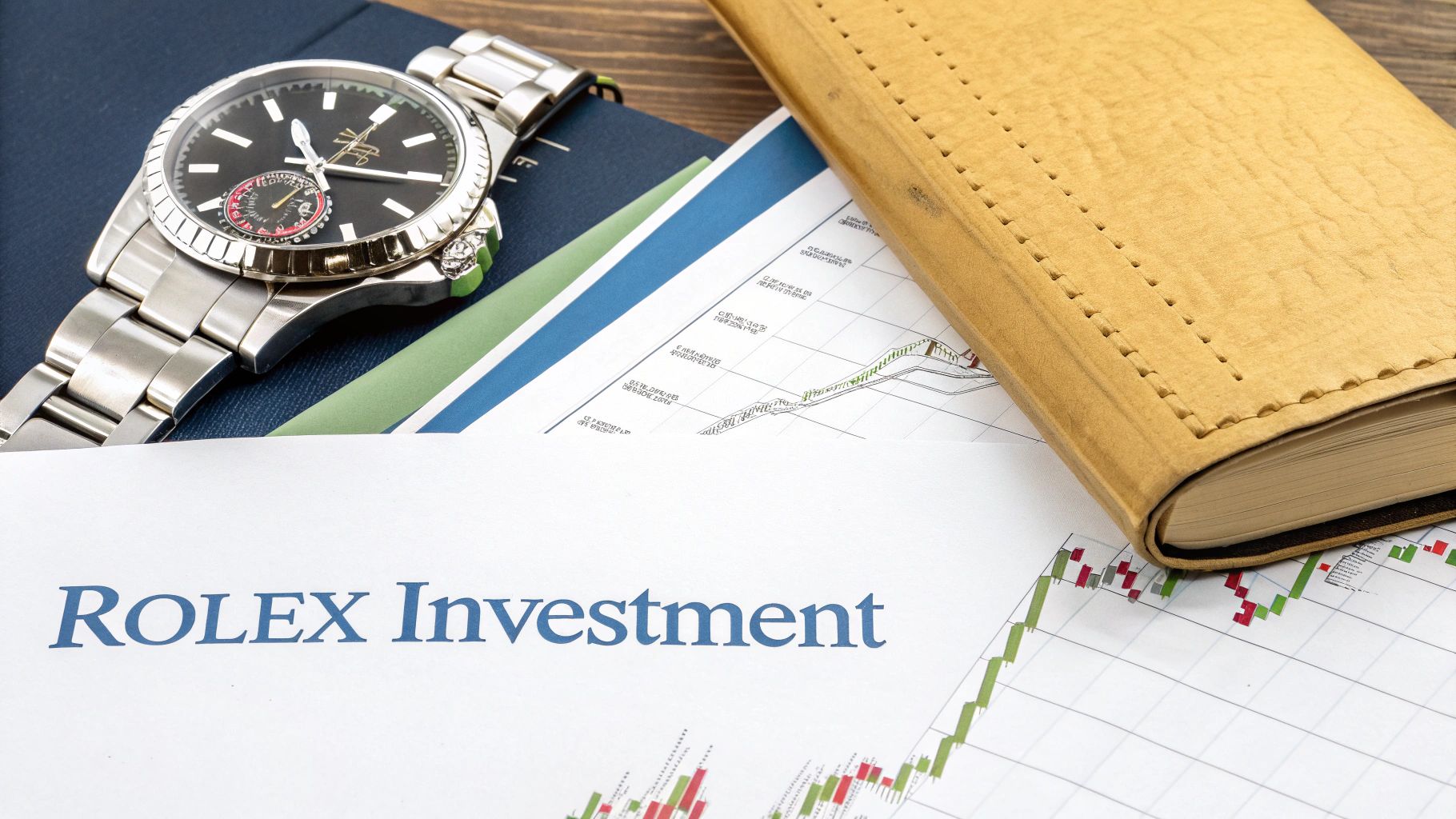 Beyond the hype and short-term market chatter, a big question remains: Is a Rolex actually a good investment for the long haul? The numbers don't lie. For decades, these watches have proven to be much more than just status symbols; they've become a surprisingly stable asset class, consistently beating inflation.
This isn't just a recent trend. Looking back, you can see a clear shift from Rolex being a maker of accessible tool watches to a producer of premium assets. While the resale Rolex value has shot up lately, the broader history is even more telling. Back in 1957, a no-date Submariner would have set you back about $150. Fast forward to 2014, and after adjusting for inflation, that $150 should have been around $1,265. But the actual market price for that watch in 2014 was $7,500—almost six times what inflation alone accounts for. This incredible price evolution is worth a closer look; you can dig into the data and see for yourself how Rolex prices have changed over 60 years.
Understanding Market Cycles
Of course, the recent cooling-off in the pre-owned market has made some people nervous. But if you zoom out and take a long-term view, these dips look less like a collapse and more like normal market cycles. After a few years of absolutely explosive growth, a market correction isn't just expected—it's healthy. It shows the market is maturing.
A well-chosen Rolex is more than a watch—it's a legacy asset. Its value is built on decades of brand equity, unwavering demand, and a history of outperforming traditional economic benchmarks.
These moments can even be smart entry points for collectors who know what they're doing. When the market softens a bit, it’s a chance to pick up iconic models at more grounded prices before the next cycle inevitably kicks in. It’s a good reminder that a Rolex isn’t a get-rich-quick ticket; it’s a durable store of value.
From Tool Watch to Tangible Asset
To really understand the growth, just look at the Submariner's journey. It started life as a purpose-built tool for professional divers. Today, it's a global icon, a symbol of success, and a hard asset that people hold in their investment portfolios right alongside stocks and real estate. Its transformation from the 1950s to now is the perfect case study in long-term value creation.
The bottom line is that the things that make a Rolex valuable—the scarcity, the brand power, and the timeless design—aren't going anywhere. Market sentiment will always have its ups and downs, but the core worth of these watches has shown a powerful and consistent upward trend for generations. That’s what separates a simple luxury item from a true legacy investment.
Answering Your Top Rolex Resale Questions
When you're dealing with the pre-owned Rolex market, a few questions always seem to pop up. Whether you're thinking of selling a watch you've owned for years or looking to buy your first pre-owned piece, getting solid answers is key. Let's tackle the big ones we hear all the time.
Will Servicing My Rolex Increase Its Value?
This is a classic "it depends" situation, and getting it wrong can be a costly mistake. For a modern Rolex, a recent service from an official Rolex Service Center (RSC) is almost always a plus. It guarantees everything is running perfectly and looks its best, which buyers love.
But for a vintage watch? Tread very, very carefully. A service center might replace an old, faded dial or polish a case, thinking they're "restoring" it. To a collector, they're erasing the very character—the history, the patina, the sharp original case lines—that makes the watch valuable. An uncertified watchmaker's service can be even worse, potentially damaging the resale Rolex value for good. Before you do anything, talk to a trusted dealer. They'll tell you if that service will actually make you money or cost you a fortune.
How Much Do Box and Papers Really Add to the Price?
A lot. Having the original box, warranty card, manuals, and hang tags—what collectors call a "full set"—is a massive deal. Think of it as the watch's birth certificate. It provides irrefutable proof of its authenticity and origin story.
For most models, a full set can boost the value by 15% to 25% over a "naked" watch. On certain rare or vintage pieces, that premium can shoot even higher.
A full set gives a buyer complete peace of mind. It tells them the watch has likely been cherished and its history preserved, justifying a significantly higher price tag. It's the gold standard in the pre-owned world.
Is Now a Good Time to Sell My Rolex?
While the market isn't at the frenzied peak we saw a couple of years back, it has stabilized at a very strong level. Demand for the big-hitter sports models remains incredibly high, and most are still trading for well over their original retail price. Simply put, a high-quality, professionally authenticated Rolex will always have a buyer.
Ultimately, the right time to sell is when it makes sense for you. The market for pre-owned Rolex watches is one of the most liquid and robust in the world, so you can be confident that you'll be able to find a buyer whenever you're ready to make a move.
At Perpetual Time, we provide transparent evaluations and fair market offers for your luxury timepieces. Explore our curated collection or inquire about selling your watch with confidence.


